
Why do some apps just get you? Like they knew what you needed before you even tapped. And others feel like they were made for some overly techy person.
That's not luck. That's user segmentation done right.
Let's understand user segmentation in a simple way, and let's talk about how you can actually apply this to build better products, smarter content, and ultimately, a business that clicks with people.
Because let's be honest, no one has time to guess anymore. Especially not your users.
So, what exactly is user segmentation?
Imagine walking into a party with 100 people and giving everyone the same drink, the same conversation, the same vibe. Now imagine walking in, spotting the chai lovers, the beer crowd, the diet-coke-only tribe, and tailoring your approach for each.
That's segmentation.
In business terms, user segmentation is the process of dividing your customers into meaningful groups based on shared characteristics.
- Demographics (age, gender, location)
- Behavior (how they use your product, how often, when)
- Psychographics (their mindset, values, lifestyle)
- Needs (what they're trying to solve or achieve)
It's not about making assumptions. It's about using real-world insight to design better experiences.
Why customer segmentation isn't just a UX thing, it's a survival strategy
Look around. Every successful product in your phone has one thing in common. They don't treat all users the same.
- Swiggy doesn't show the same restaurant list to a college student in Pune and a retired banker in South Delhi.
- Spotify doesn't give everyone the same playlists.
- Netflix knows who binges K-dramas and who likes slow-burn thrillers.
Because sameness is the enemy of relevance. And loyalty is fragile, something we explore in detail in Why Loyal Users Leave, where we break down the hidden retention blind spots that can cost you your best customers. So yes, customer segmentation is a UX strategy. But it's also a business growth tool.
It helps you:
- Personalize onboarding (and reduce drop-offs)
- Prioritize features (that solve real pain)
- Target marketing better (more ROI, less spray-and-pray)
- Reduce churn (by actually being useful)
Real-life example: A food delivery app without segmentation
Picture this: You're building a food delivery app. But you treat every user the same. Result? You show late-night biryani offers to working moms who just want kid-friendly lunch. You send vegan menu updates to hardcore meat lovers. You prioritise a flashy map feature instead of fixing the messy cart UI. It's chaos.
But with segmentation, you can identify key personas:
- Aarav: 22, college student, always orders post 10 pm
- Neha: 35, working mom, orders lunch for family
- Sameer: 28, fitness freak, filters high-protein options
Now imagine crafting different flows, features, and messages for each of them. That's not just good UX. That's good business.
Okay, now let's talk personas
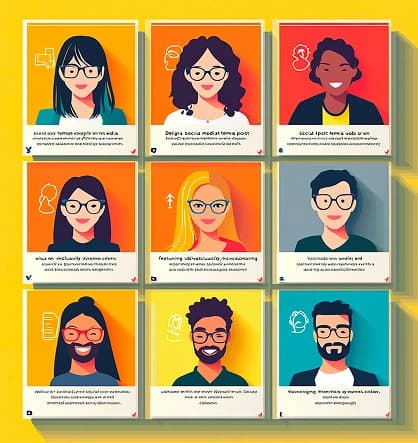
If user segmentation helps you see the groups, personas help you understand the people. A user persona is a fictional character built on real user data. It captures the mindset, motivations, frustrations, and habits of a particular segment. Think of it as a human-shaped lens through which you make product decisions.
Not just: "Our users are aged 25 to 34"
But: "Meet Priya. She's 27. She's juggling a demanding marketing job and a side hustle. She uses our app in 5-minute pockets between Zoom calls. She hates apps that make her think too hard. She values speed, not features."
Now, when you're debating whether to add a new feature or streamline the current one, you just ask, What would Priya want? Suddenly, you're not designing in a vacuum. You're practicing the kind of UX research that goes far beyond usability testing, the kind that uncovers what your users actually need, not just how they click.
How to create user personas that aren't just guesswork
Most personas fail because they're built on assumptions, not data. Real personas come from talking to real people. Here's how you do it:
1. Start with user research
You can't understand user personas without data and empathy. This means:
- Run interviews (not surveys) for actual human conversations.
- Ask open-ended questions about frustrations, excitements, and disliked tools.
- Watch users interact with your product. Observe confusion, skipped steps, and moments of delight.
Even five real conversations are more valuable than 100 assumptions if large-scale research isn't possible.
2. Spot the patterns
After gathering raw data, look for patterns. Do you see users trying to finish tasks quickly? Are they using your tool late at night? Are some frustrated by complex dashboards while others enjoy analytics?
Cluster these behaviors into segments.
3. Build personas for your top 2-3 segments
Give them names, faces, and context. Not excessive detail from stock photos, but enough to feel real. Each persona should include:
- Age (or life stage)
- Job or role
- Goals (what they want)
- Frustrations (what's stopping them)
- Quotes (from actual users)
- Tools or products they already use
The key: personas should be usable decision tools, not fiction.
The power of empathy in product strategy
Empathy is often overlooked. But it's as important as usability in good UX. Segmentation and personas aren't just tactics. They're ways to show users they're seen.
Understood users are more likely to convert, stay, and recommend your product to friends.
Quick Tips to Avoid Common Persona Pitfalls
- Don't build too many. Two or three solid personas are better than ten half-baked ones.
- Don't get stuck in demographics. Focus on behavior and mindset more than age or income.
- Don't treat personas as one-time assets. Revisit and refine them as your product evolves.
- Don't just build personas. Use them. In every product sprint. In every marketing brainstorm. In every onboarding flow.
- Otherwise, they're just pretty posters.
So where does UX Prosperar come in?
If all of this sounds like something your team should be doing, but hasn't had the time, bandwidth, or clarity to execute, this is exactly where we step in.
At UX Prosperar, we don't just hand you pretty reports. We embed ourselves in your product reality. We talk to your users. We map customer journeys. We test what matters. And we help you build digital experiences that feel seamless, because they're grounded in truth.
Founded in Dubai and led by Prachi Shrivastava, who's shaped UX strategies for companies like Careem, OLX, and Domino's, we've worked with ambitious brands across telecom, FMCG, mobility, and beyond.
What we bring to the table:
- User persona research that's evidence-based
- Customer segmentation grounded in real behavior
- Design sprints that solve problems
- UX copywriting that doesn't sound robotic
- Mobile app testing with Indian, Middle Eastern, and global users
So whether you're starting from scratch or scaling fast, we're here to make sure you grow in the right direction, guided by the people you're building for.
Ready to stop guessing and start listening?
Reach out to UX Prosperar and let's build a better experience, together.